Pool swim training: technique, pacing and critical swim speed (CSS)
7 min readUpdated:
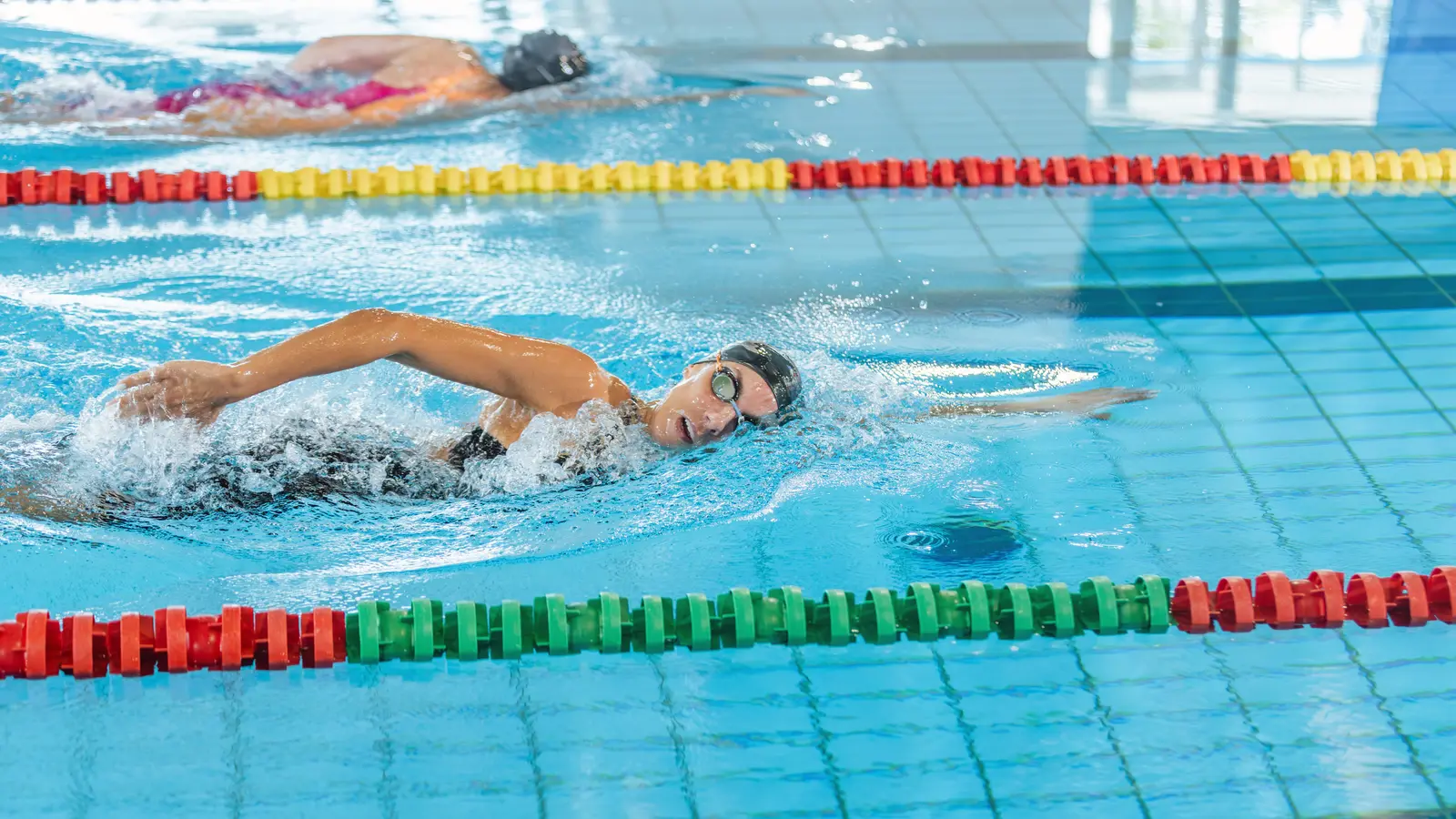
Pool swim training is a structured session of warm-up, technique drills, a main set and a cool-down. For adult swimmers most progress comes from technique: body position, breathing and the catch. Pace is set from critical swim speed (CSS), your threshold pace in the water, and tracked with the pace clock.
In this guide
- What does a good pool session consist of?
- Which technique points should adult swimmers prioritise?
- Drills and kit: what are the pull buoy, fins, paddles and kickboard for?
- What is critical swim speed (CSS) and why does it matter?
- How do you use the pace clock and send-off times?
- How often should you swim, and what are the most common mistakes?
- FAQ
What does a good pool session consist of?
Getting in and swimming non-stop until you are tired is the most common approach and the least productive one. A structured session has four parts. The warm-up opens the shoulders and settles your breathing with easy swimming and a few different strokes. The technique block works on one skill with drills and short repeats. The main set is the point of the session: endurance, threshold or speed. The cool-down brings your heart rate down with loose, easy swimming.
For someone who can swim three times a week for 45 minutes, a session might look like this: ten minutes of warm-up, ten minutes of short repeats on a single drill, a twenty-minute main set and five minutes of cool-down. The technique block comes before the main set for a simple reason: you cannot learn a new movement when tired, and the old habit comes straight back. In the main set, try to keep what you worked on in the drill.
Which technique points should adult swimmers prioritise?
The first priority is body position. If your hips and legs sink, every stroke is a fight against drag. Keeping your head neutral, looking down rather than forward, lifts the hips. The second is breathing. Holding your breath underwater creates tension; if you exhale steadily through your nose and mouth while your face is in the water, you only need to breathe in when you turn. Turn your head with your body to breathe, rather than lifting it.
The third priority is the catch. After your hand enters the water, rather than pressing straight down, you want to keep the elbow high, turn the forearm into a vertical paddle and push the water backwards. This is the skill adults learn last and it takes patience. Even a small improvement in these three areas can buy more speed than extra fitness. Being filmed once or getting feedback on deck makes the problem far easier to see.
Drills and kit: what are the pull buoy, fins, paddles and kickboard for?
A drill isolates and exaggerates one part of the stroke: single-arm swimming, kicking on your side, dragging your fingertips along the surface. One or two drills per session is enough; ten different drills in a row teach nothing. Kit works the same way: it is a tool, not a crutch. Used in short doses with a clear purpose it helps; used all the time it hides the weak points of your real stroke.
- Pull buoy: floats your legs so you can focus on the arm pull. It does not fix a hip position problem, it only hides it.
- Fins: short fins give speed and balance during drills and improve ankle flexibility. Wearing them for long stretches makes the kick lazy.
- Paddles: they sharpen the feel of the catch but load the shoulder. Start small with short sets, and skip them if your shoulder hurts.
- Kickboard: it trains the kick, but holding the arms out with the head up strains the neck and lower back for some swimmers. Side kicking is an alternative.
What is critical swim speed (CSS) and why does it matter?
Critical swim speed (CSS) is an estimate of the fastest pace you can hold for a long time without falling apart; think of it as the swimming equivalent of threshold pace in running or FTP on the bike. It is usually calculated from timed, all-out swims over different distances and expressed as time per 100 metres. It is a more reliable reference than a single race time, because it reduces the effect of turns and a fast start.
The value of CSS is that it gives training intensity a yardstick. Easy swims sit clearly slower than it, threshold sets close to it, and short speed repeats faster. Without a measured CSS, "swim at a moderate pace" leads most swimmers to do every session at the same medium-hard effort. As your technique and fitness improve, your CSS changes too, so re-measuring every few months makes sense.
How do you use the pace clock and send-off times?
The big second-hand clock at the end of the pool is a swimmer's best friend. A send-off is the time from the start of one repeat to the start of the next. "8 x 100 on 2:00" means you start a new 100 metres every two minutes. Swim it in 1:45 and you get 15 seconds' rest; slow down and the rest shrinks. That way both pace and recovery control themselves.
Set the send-off to something you can hold until the end of the set. If the first repeats feel far too easy and the last ones impossible, either you started too fast or the send-off is too tight. In a well-built threshold set your times stay close together from start to finish. Starting each repeat with the hand at the top or bottom of the clock makes the maths easier.
How often should you swim, and what are the most common mistakes?
Swimming is a sport where feel and technique fade quickly. The general view is that two sessions a week maintain your level and three or more let you improve. Short, frequent sessions embed technique better than long, rare ones. In triathlon the swim is usually the shortest leg, but a weak swim means starting the bike tired and behind. If you have shoulder pain that does not settle, stop loading it and see a health professional.
- Swimming every session non-stop at the same medium-hard pace.
- Doing technique work after the main set, when you are already tired.
- Spending almost the whole session with a pull buoy and fins.
- Starting a set too fast and failing to finish it.
- Holding your breath and lifting your head to breathe.
Frequently asked questions
Usually the problem is not fitness but holding your breath underwater. If you do not exhale while your face is in the water, you try to breathe out and in during the brief turn and cannot keep up. Practise exhaling steadily through your nose and mouth underwater, standing or holding the wall. And start slower: going out fast on the first lengths takes your breath away.
No. CSS is an estimate of a threshold pace you can sustain for a long time, used to set training intensity. In a short pool race you swim faster than it; in a long open water race you are usually slower, because there are no push-offs and you have to navigate. Treat CSS as a reference point, not a target.
It does not ruin it, but it can hide problems. Because it floats your legs, you will not feel sinking hips and the issue seems to disappear. Using it in short sets to focus on the arm pull is useful. If you spend most of your sessions with one, swim the same distances without it regularly and notice the difference.
There is no single right number; it depends on race distance, your current level and your weekly time. As a general principle, the first goal is to be able to swim the race distance continuously and comfortably in training. After that, improving technique and threshold sets usually pays more than adding metres. Frequency matters too: three short sessions a week often beat one long one.
This guide is general information, not medical advice. If you have a health condition, an injury or pain that does not go away, see a health professional before you train.